AI coding agents add 30% more code but not more finished software, Harvard researchers find
A study of more than 700 companies found code output rose after AI agents arrived, but completed tasks did not, and code reviews took 49% longer. It has not been peer reviewed.
How this story was checked
- ResearchedWith AI assistance · 2 sources
- AI source checkEach sentence matched to its source
- Editor approvalMayank Sahu · 14 Oct, 15:46
- Published14 Oct, 15:46
In short
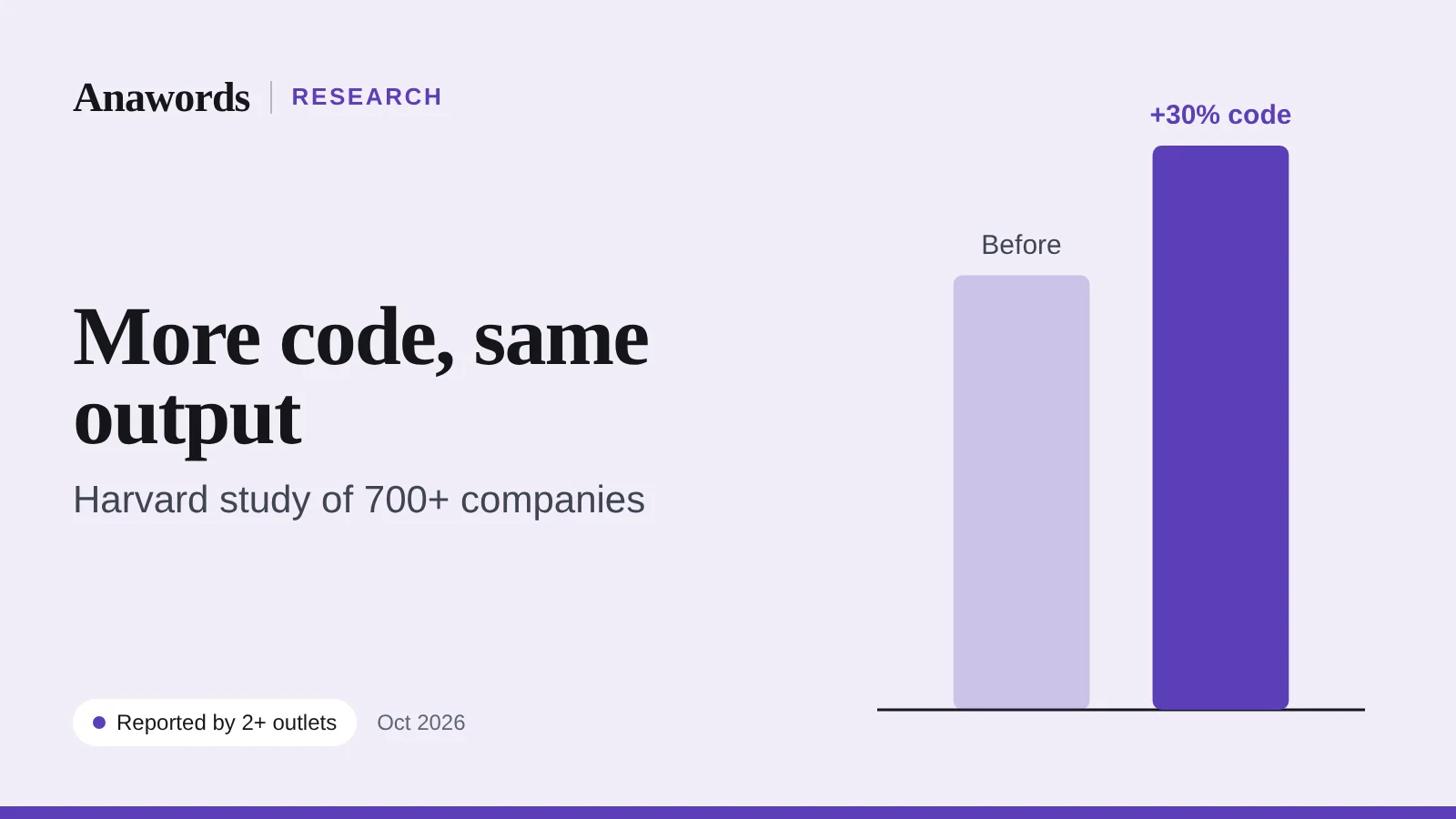
Harvard economists Fiona Chen and James Stratton studied about 300 million work events from more than 700 software companies. After AI coding agents arrived, lines of code per developer rose about 30%, but completed tasks did not rise significantly and time to merge code rose 49%.
What the study found
Harvard economists Fiona Chen and James Stratton studied how AI coding agents changed work at more than 700 software companies, using about 300 million recorded work events from January 2021 to March 2026.12 The data came from Jellyfish, which sells software that tracks engineering work.12
After companies adopted AI coding agents, the researchers found:12
- lines of code added per developer rose about 30%;
- commits rose 20% and pull requests, or code changes sent for review, rose 23%;
- but completed tasks and larger features in project trackers such as Jira showed no statistically significant change.
The review bottleneck
The time from submitting a code change to merging it rose 49%, roughly three and a half extra days.12 The share of changes sent back for rework nearly doubled, and review comments per change rose 35%.12
By March 2026 nearly 80% of the companies used AI code review tools, but AI wrote only a small share of review comments.12
The authors write that “productivity gains do not fully pass through to changes in software output or employment.”1 They found no fall in employment they could link to AI.1
Limits
The study has not been peer reviewed.2 It covers only Jellyfish customers who agreed to research use, so results may not apply to every company, and it looks at effects up to March 2026.2 It does not show whether AI agents produce more faulty code.2
What it means for teams
Writing code faster does not ship software faster if people still have to review it. Teams adding AI coding agents may need to plan for more review capacity, not just more output.
Fact ledger
How labels workQuestions readers ask
Do AI coding agents make developers more productive?
This study found more code was written, but not more finished tasks, because code reviews slowed down.
How big was the study?
About 300 million work events from more than 700 software companies, from January 2021 to March 2026.
Is the study peer reviewed?
Not yet. It is a working paper.